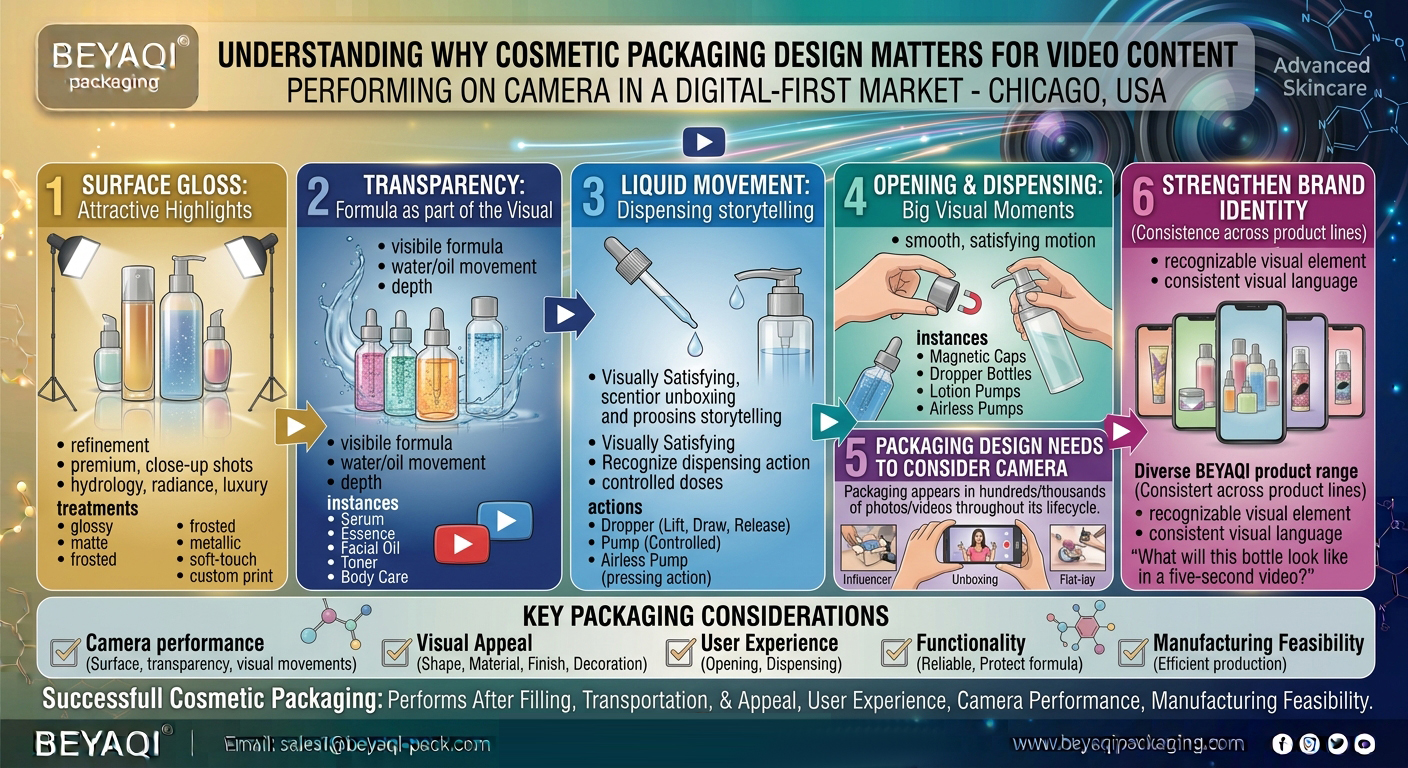
In today’s beauty market, having a great product is no longer enough.
Consumers are discovering skincare and cosmetic products through Instagram, TikTok, YouTube, and other visual platforms before they ever see them on a retail shelf. Product videos, unboxing content, tutorials, and texture demonstrations have become an important part of how beauty brands communicate with consumers.
Read More 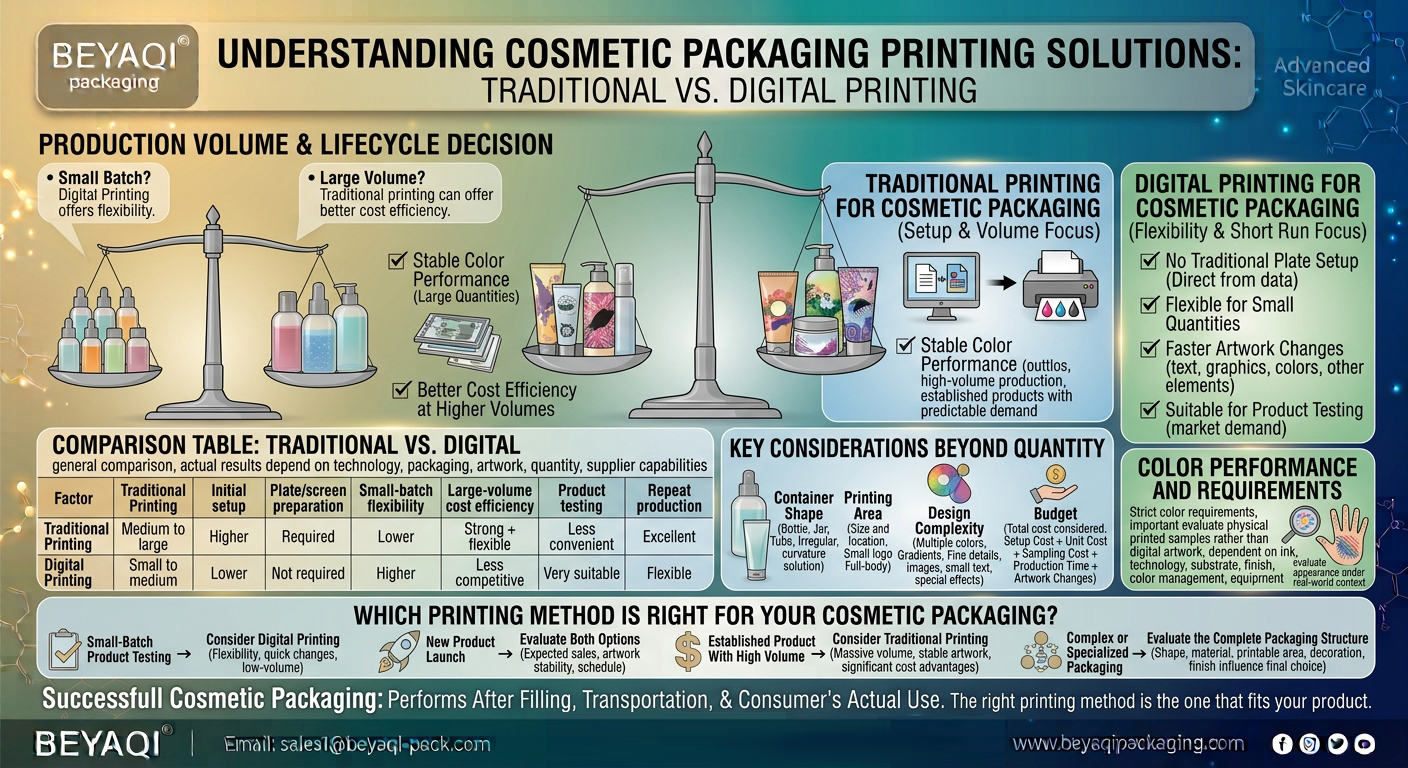
Compare traditional and digital printing for cosmetic packaging. Learn how order volume, design complexity, color, budget, and production plans affect the right printing method.
Read More 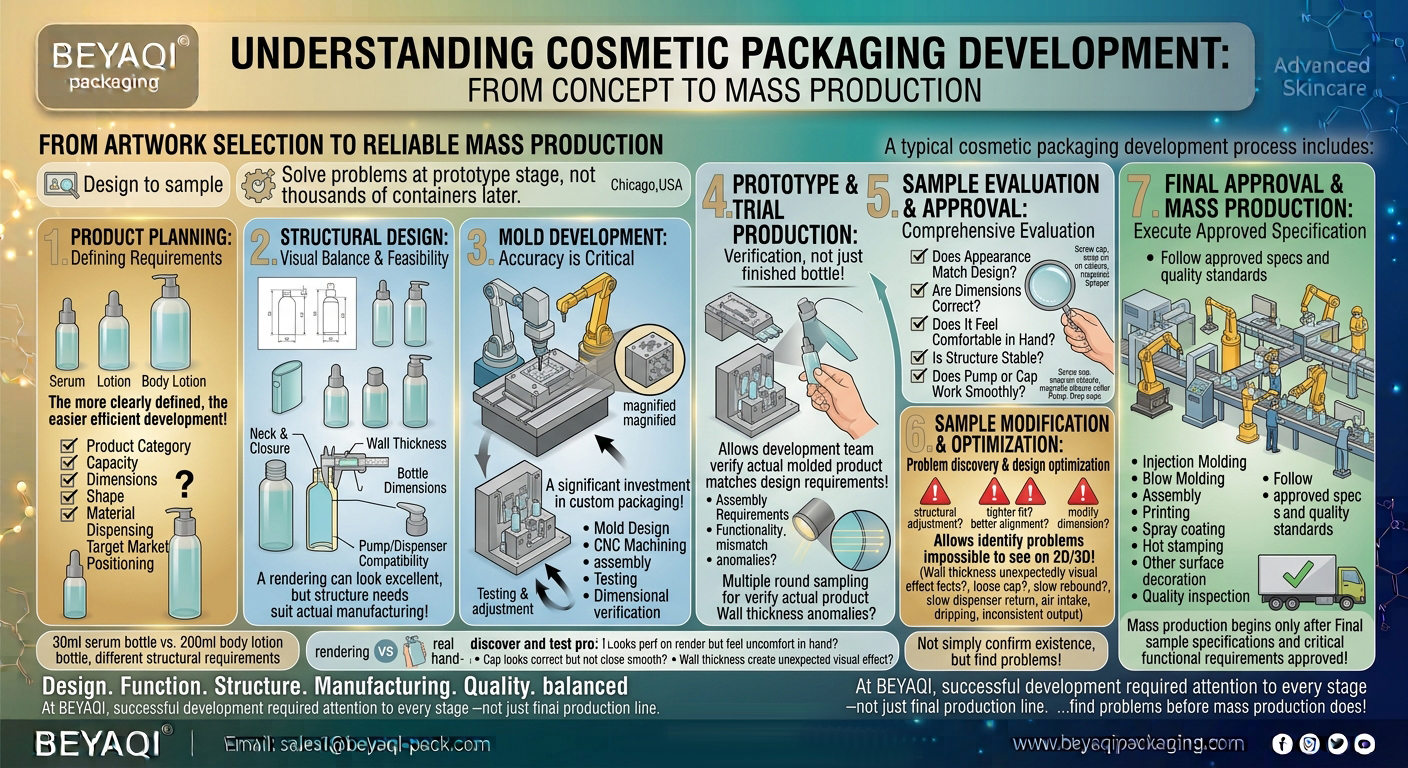
Discover how cosmetic packaging goes from concept to mass production. Learn about structural design, mold development, prototyping, sample testing, approval, and manufacturing.
Read More 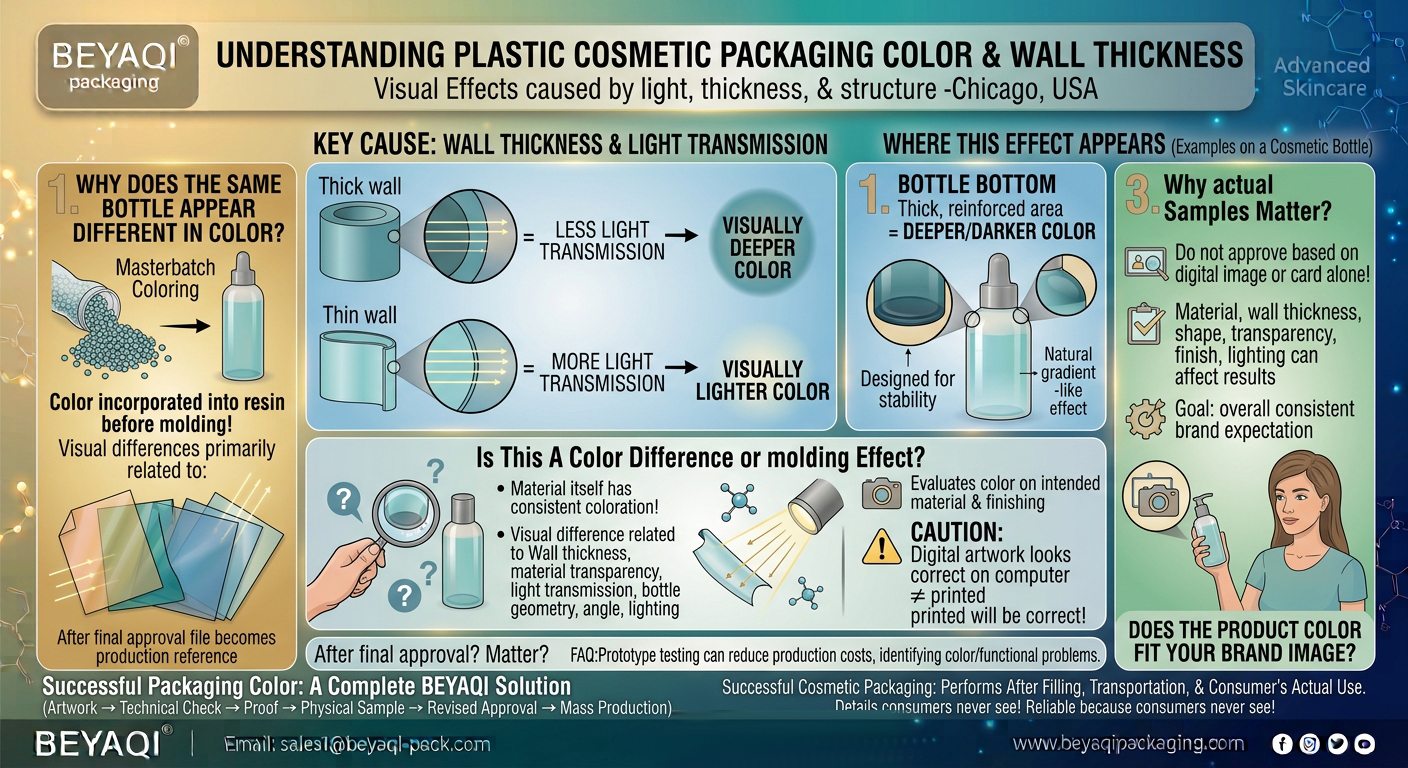
Learn why the bottom of a plastic cosmetic bottle can appear darker than the body. Discover how wall thickness, material transparency, molding, and light affect packaging color.
Read More 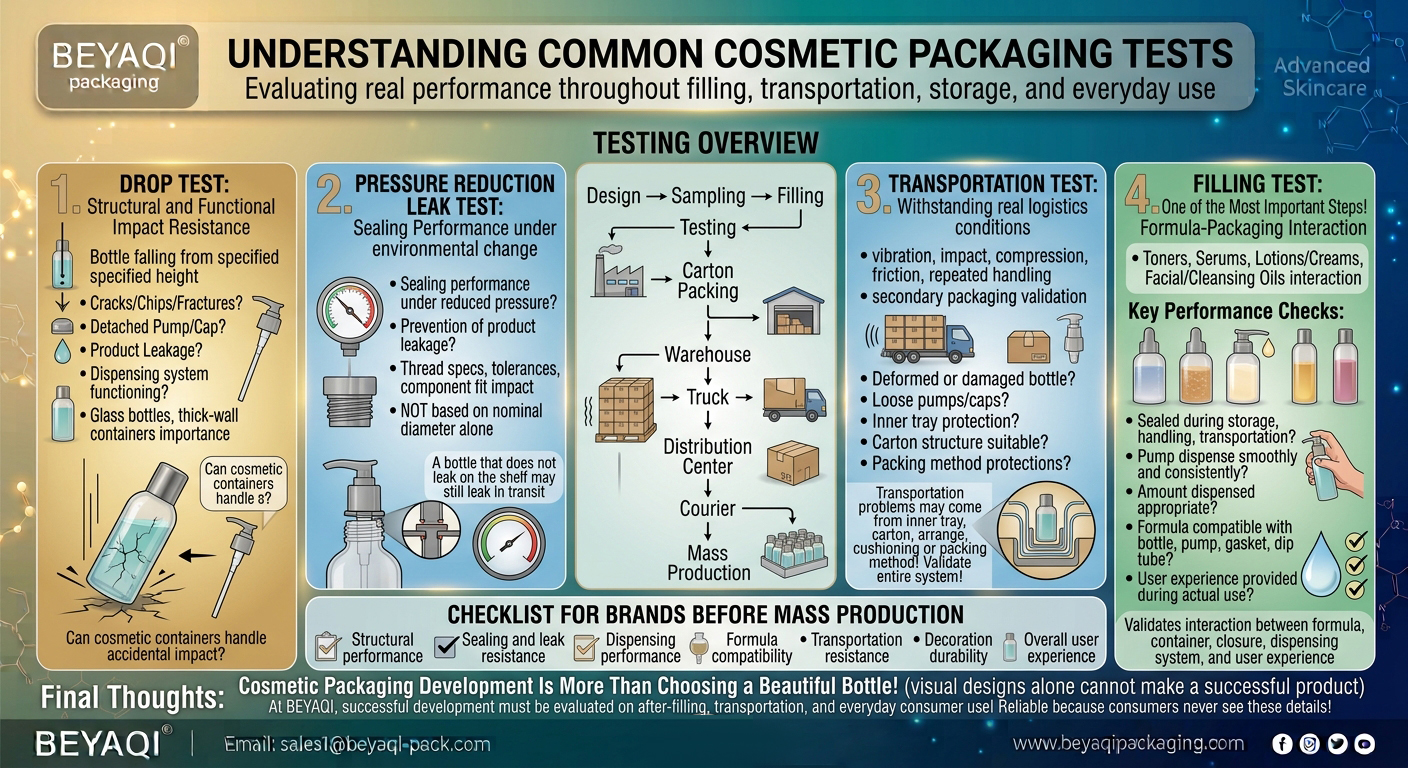
When brands first start working with cosmetic packaging, it is easy to think the development process is simple:
The bottle is selected.
The color is approved.
The printing looks good.
So, is it ready for mass production?
Read More 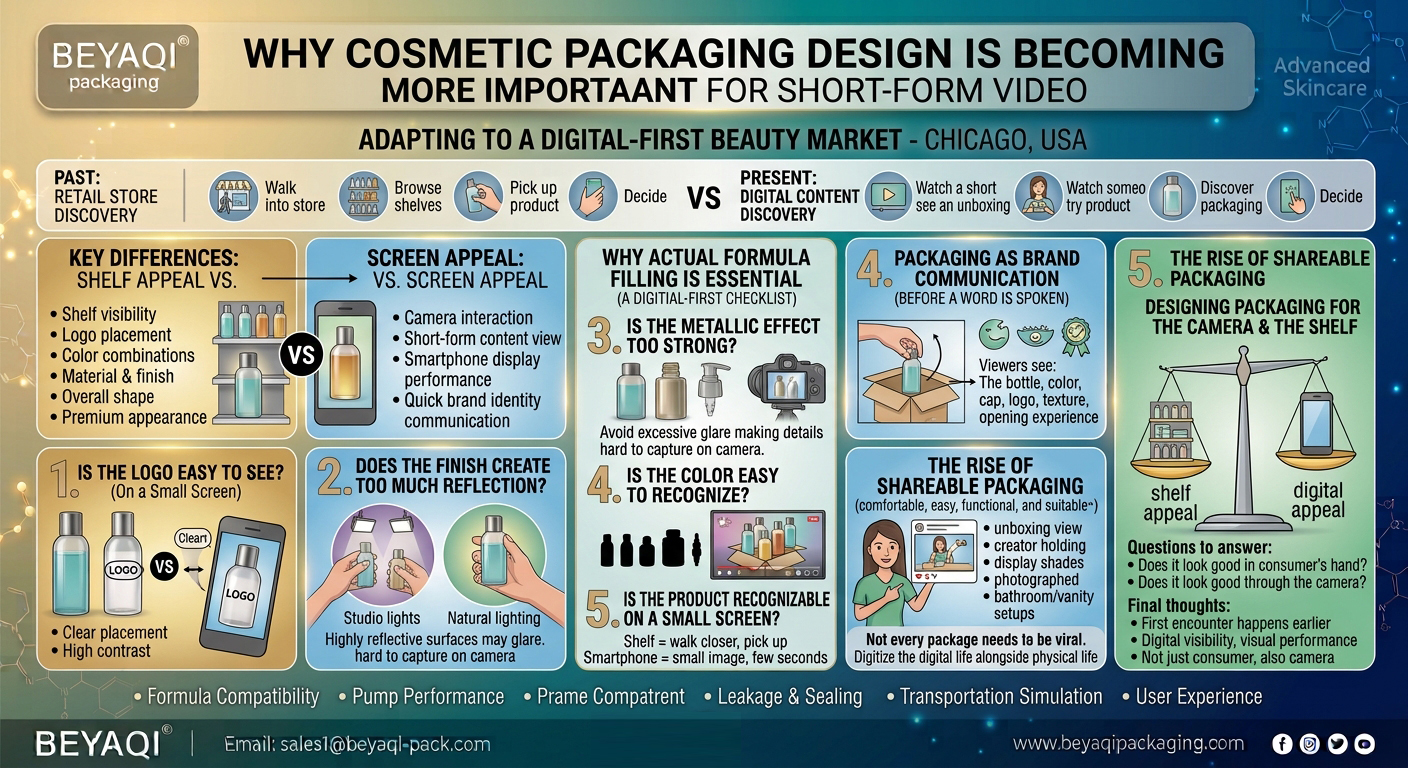
In the past, packaging design was mainly created for one place:
The retail shelf.
Today, more and more beauty brands are designing packaging for another place first:
The smartphone screen.
Consumer behavior has changed dramatically.
In the past, consumers would walk into a store, browse the shelves, pick up a product, and then decide whether to buy it.
Read More 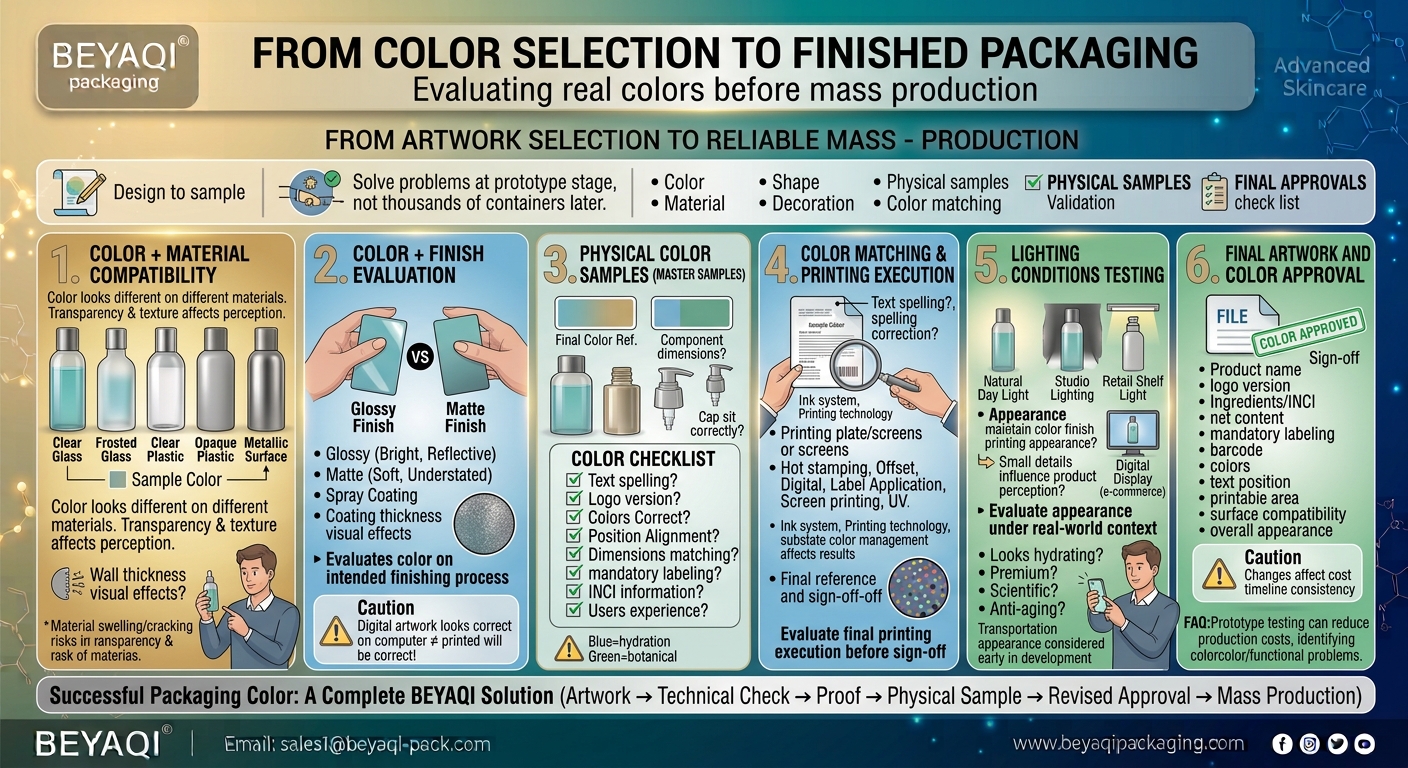
Discover how color influences cosmetic packaging design, brand perception, product positioning, and consumer expectations. Learn how BEYAQI approaches color, materials, finishes, and packaging development.
Read More 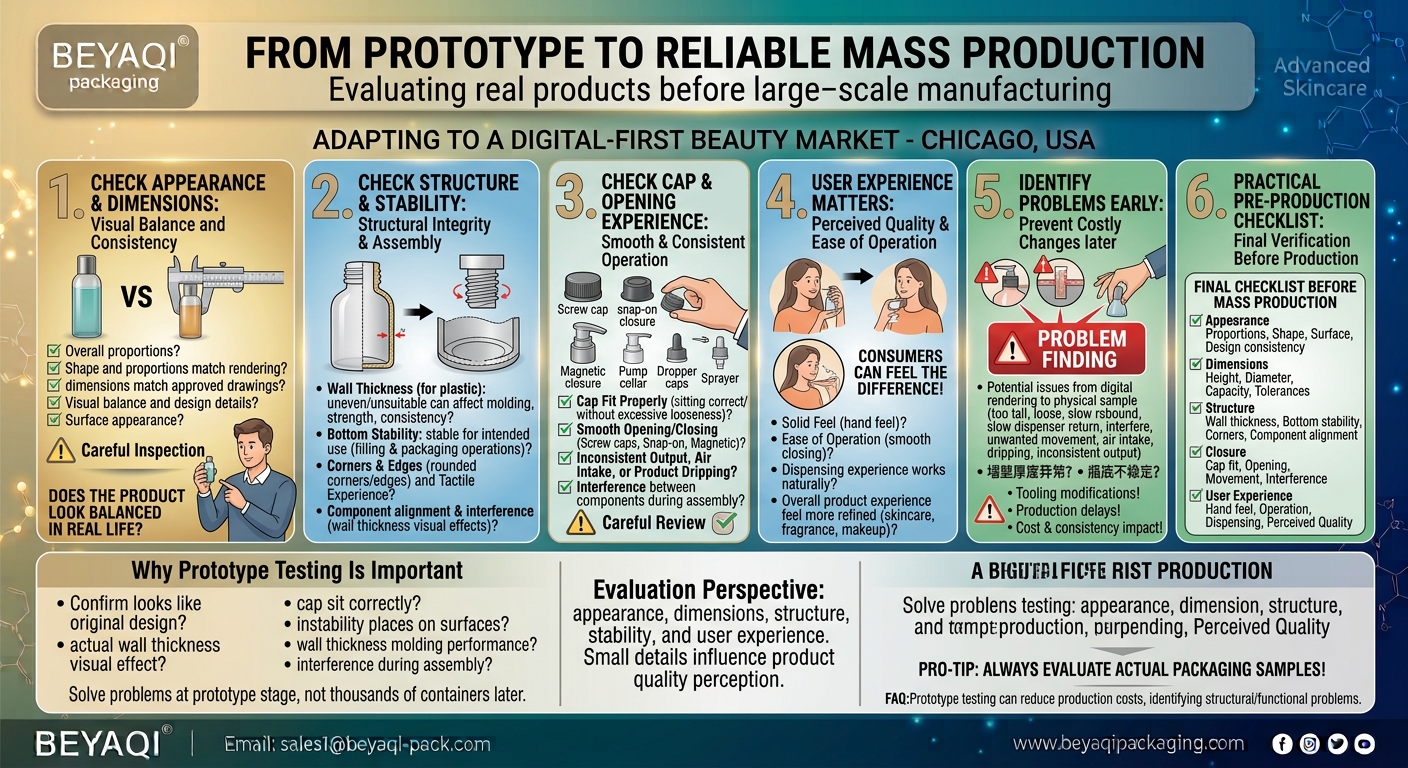
Learn what to check before mass producing cosmetic packaging, including appearance, dimensions, wall thickness, stability, cap fit, opening experience, and prototype testing.
Read More 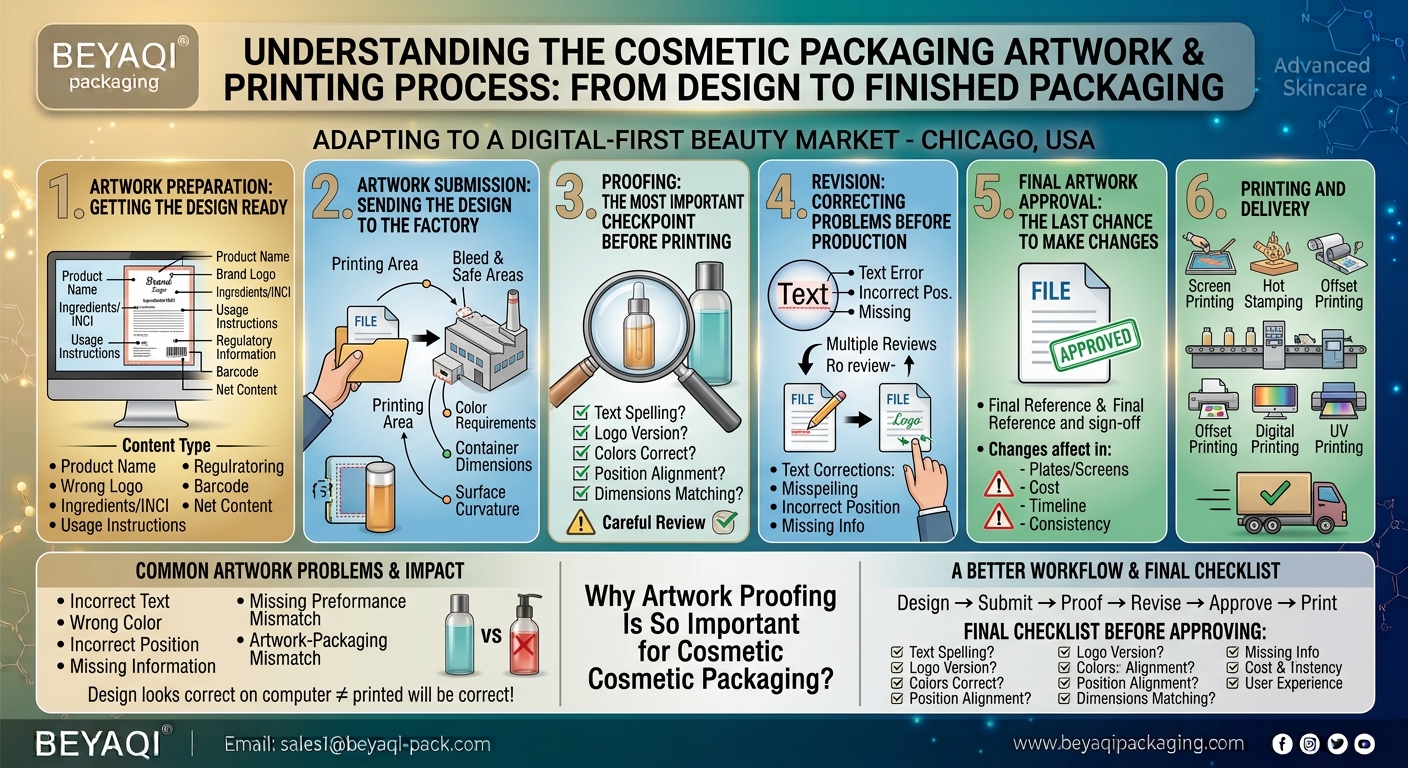
Learn how cosmetic packaging artwork moves from design to printing, including artwork submission, proofing, revisions, final approval, color matching, and production.
Read More 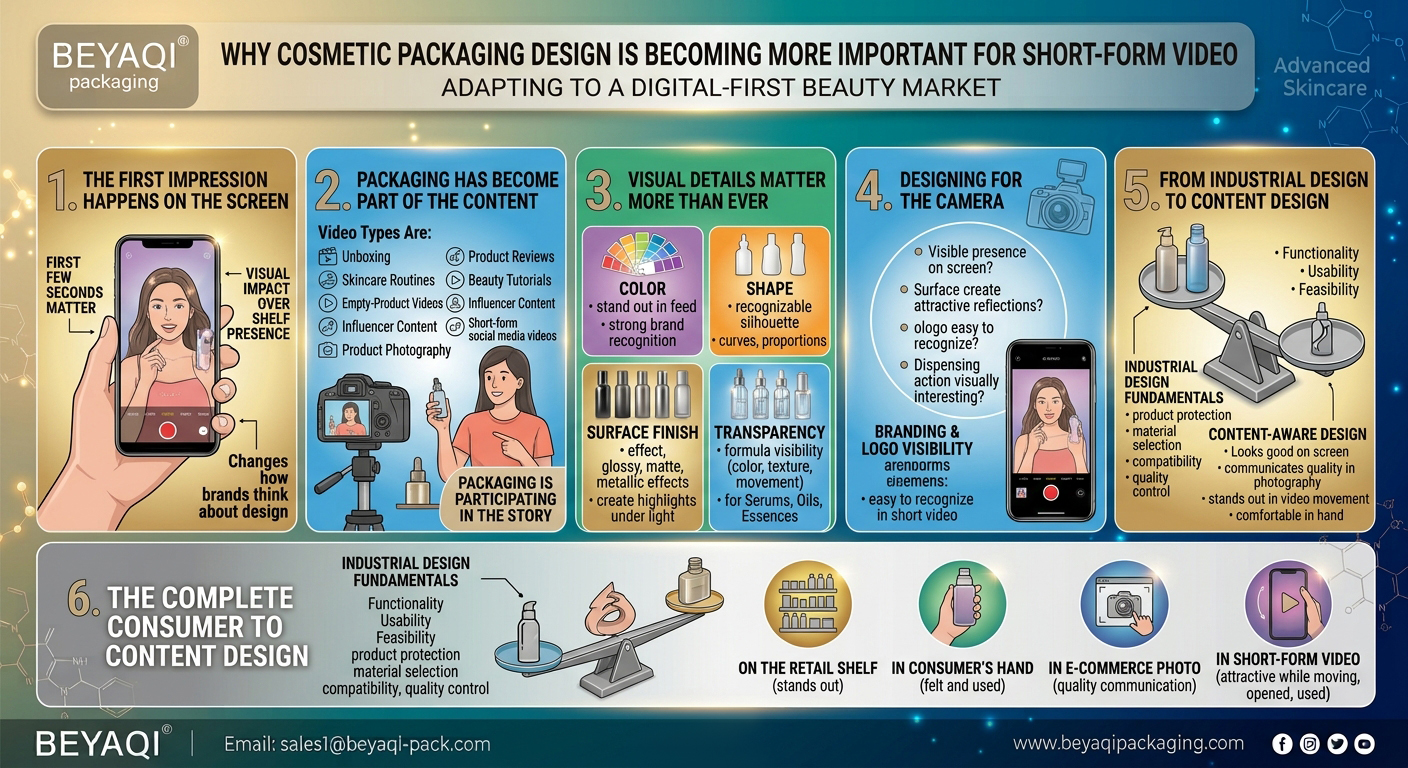
In recent years, one question has become increasingly important when developing cosmetic packaging:
Does the product look good in short-form video?
In the past, packaging design was mainly developed around the physical retail environment. Brands focused on how a product would look on a shelf, how it would perform in store displays, and whether consumers could easily recognize it.
Today, the beauty industry is changing.
With the rapid growth of TikTok, Instagram Reels, YouTube Shorts, and other visual platforms, consumers are increasingly discovering beauty products through their phone screens rather than traditional retail shelves.
This shift is changing the way brands think about cosmetic packaging design.
Read More 


 English
