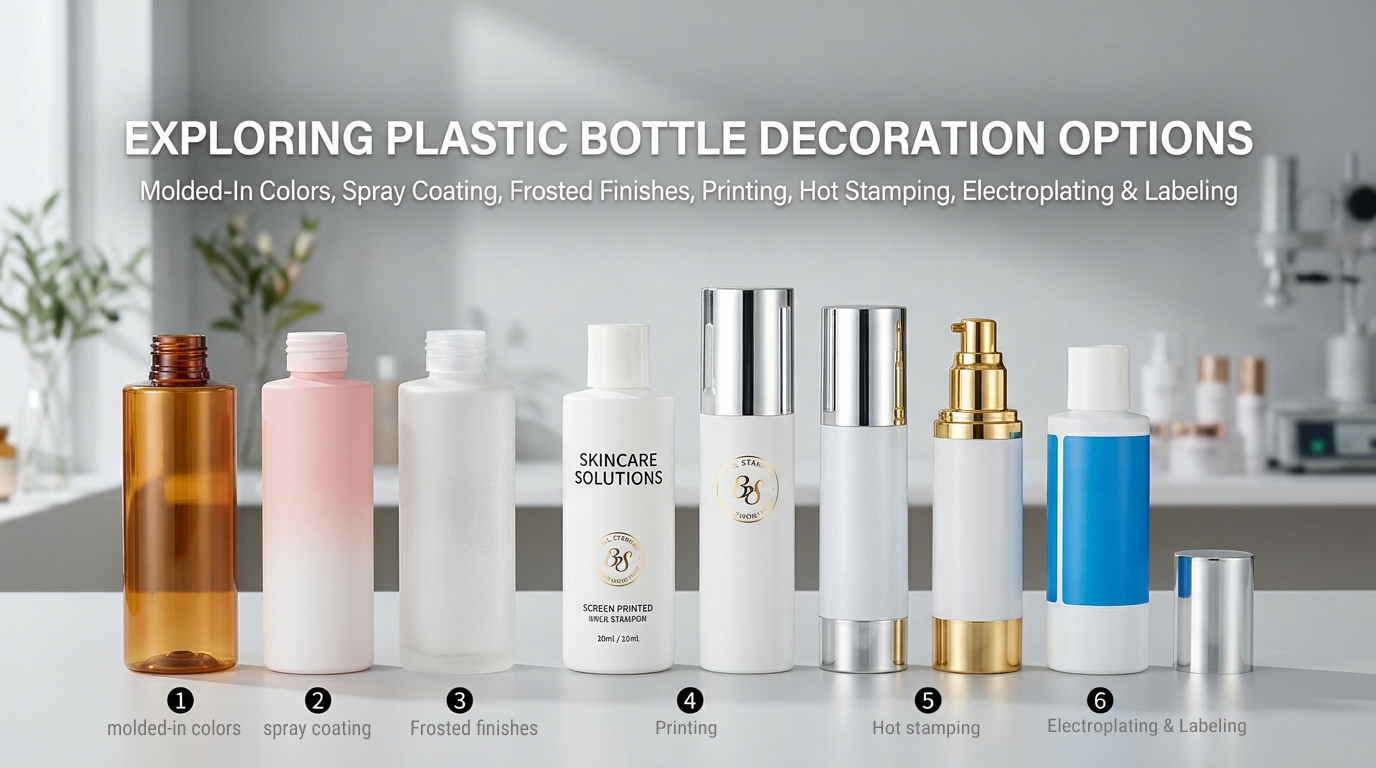
When selecting plastic bottles for skincare, makeup, and personal care products, one of the first questions buyers ask is: What decoration options are available?
Plastic cosmetic packaging can be customized in many ways, from molded-in colors and spray coatings to screen printing, hot stamping, electroplating, and labeling. Each technique creates a different visual effect and comes with its own material requirements, production considerations, and cost implications.
However, not every decoration method is suitable for every bottle. PET, PETG, PP, PE, and ABS differ in their optical properties, surface characteristics, heat resistance, and manufacturing processes. The final result also depends on the bottle shape, decoration area, production volume, and quality requirements.
Choosing the right plastic bottle decoration technique means balancing visual appeal, material compatibility, production cost, and long-term consistency.
Read More 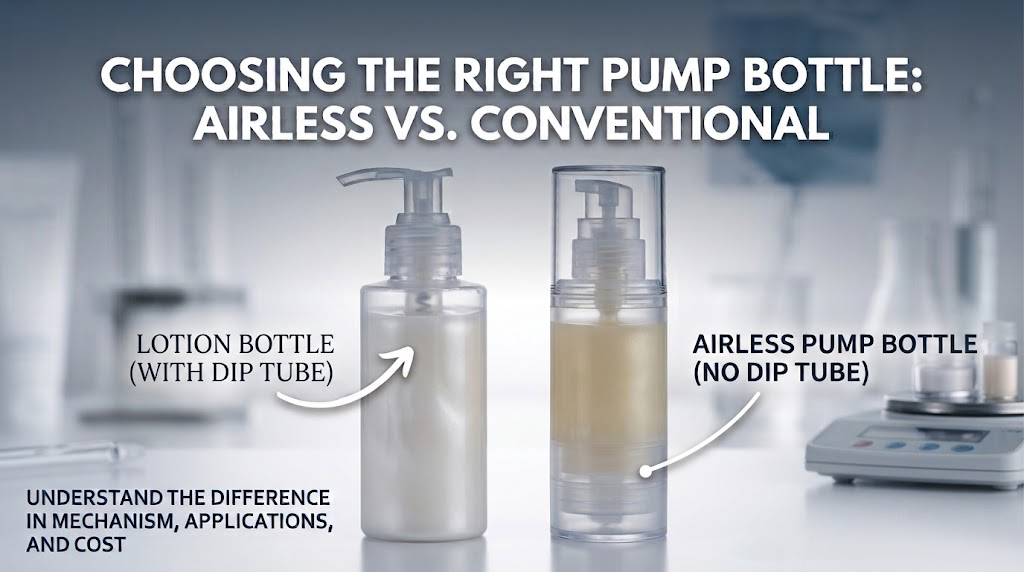
When choosing cosmetic packaging, buyers often ask:
What is the difference between an airless bottle and a lotion bottle?
Why does an airless pump bottle usually cost more?
Can a regular lotion bottle dispense skincare lotion effectively?
Is an airless bottle always the better choice for premium products?
Although both packaging types can dispense skincare formulas through a pump, their internal structures and dispensing mechanisms are different.
A conventional lotion bottle typically uses a dip tube to draw product from the bottom of the container. An airless pump bottle generally uses a piston or another moving mechanism to push the formula toward the pump as the product is dispensed.
The right choice depends on the formula, dispensing requirements, product positioning, packaging budget, and filling process—not simply which bottle looks more premium.
Read More 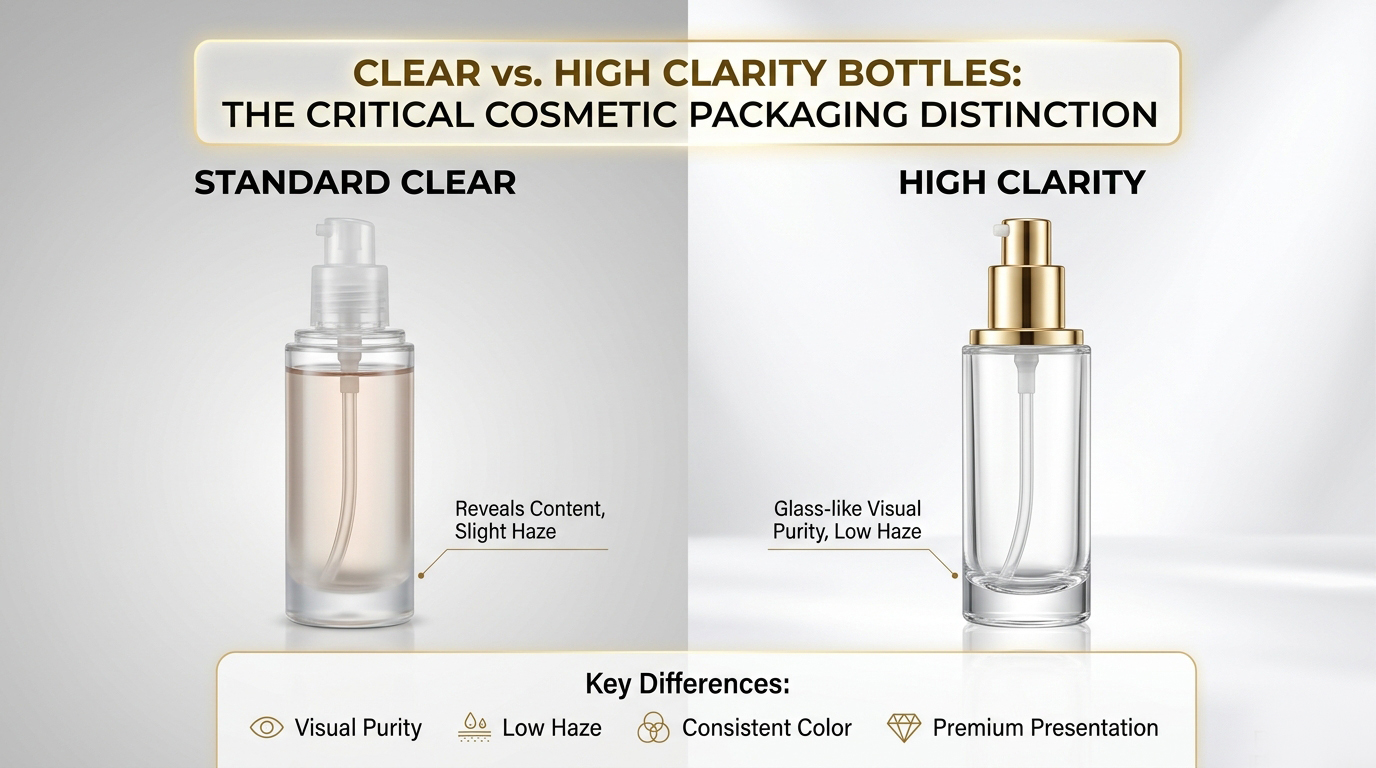
When choosing plastic bottles for skincare and beauty products, buyers often tell packaging suppliers, “We need a clear bottle” or “We want a high-clarity finish.”
But are clear and high-clarity cosmetic bottles actually the same?
Not necessarily. Both may allow consumers to see the product inside, but the expected appearance can be quite different.
A clear bottle allows light to pass through and makes the contents visible. A high-clarity bottle places greater emphasis on visual purity, low haze, consistent color, and a glass-like appearance.
Understanding this distinction helps brands select suitable packaging materials, establish realistic quality standards, and avoid misunderstandings during sampling and mass production.
Read More 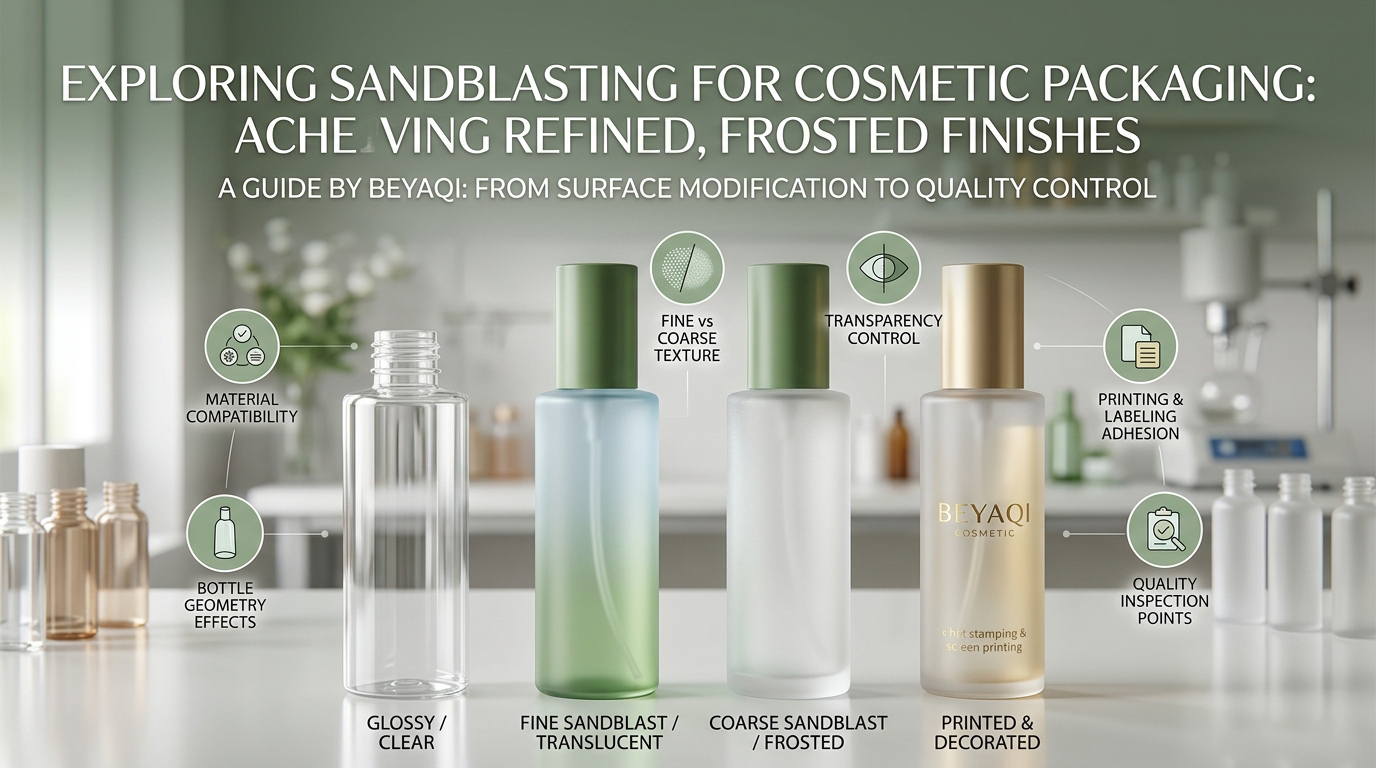
Many skincare brands want packaging that looks soft, refined, and less glossy. For transparent PET and PETG bottles, a high-gloss finish may not always match the desired brand image.
Sandblasting is one surface treatment option for creating a frosted appearance on cosmetic packaging. By modifying the surface texture, it reduces the sharp reflections associated with glossy finishes and creates a softer visual effect.
However, achieving a high-quality frosted finish involves more than simply making a bottle look matte. Material selection, bottle geometry, surface texture, transparency, and subsequent decoration all affect the final result.
In this guide, we explain how sandblasting works, what it can achieve, and what brands should consider before applying it to cosmetic bottles.
Read More 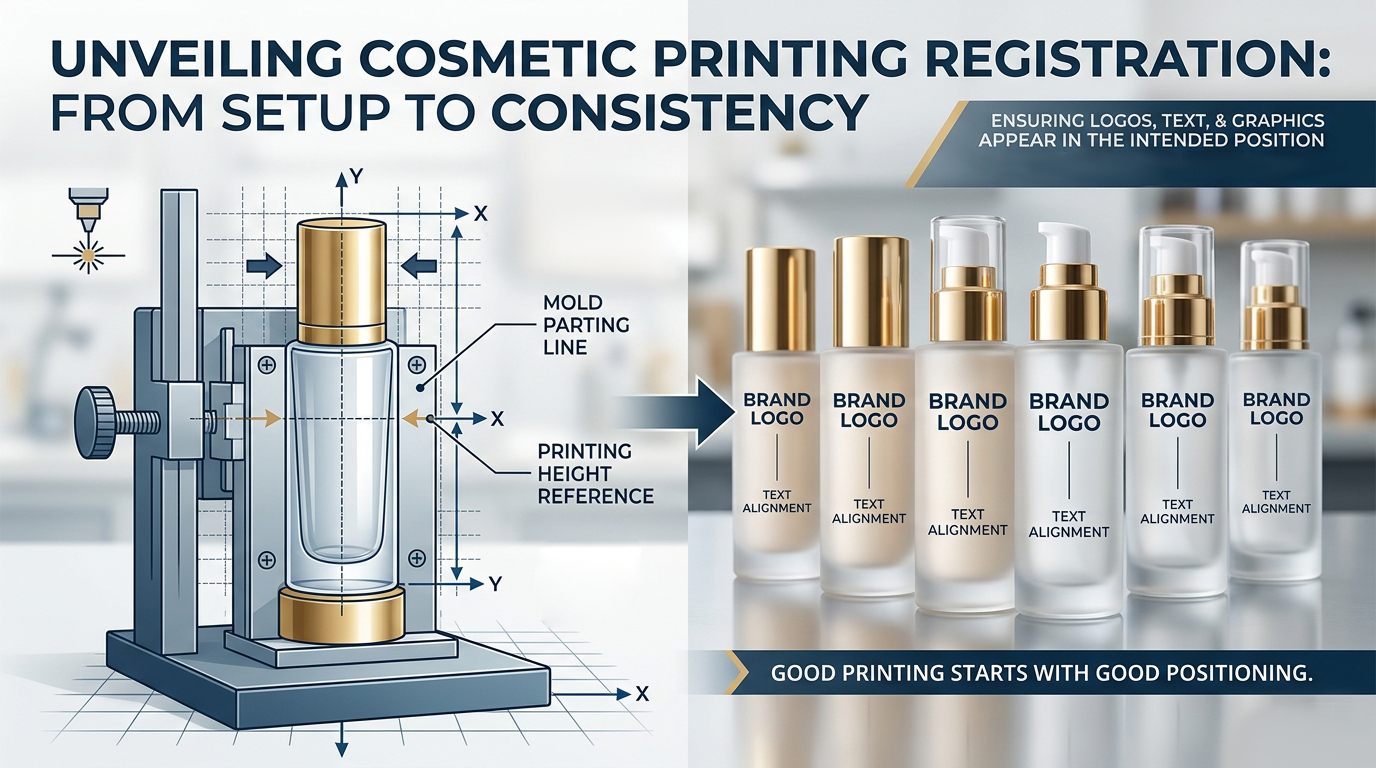
When developing printed cosmetic packaging, customers often hear comments from manufacturers such as:
“We need to set up the printing registration again.”
“The artwork position has changed, so a new registration is required.”
“Even with the same bottle, changing the printing orientation may require a new setup.”
This can raise a few questions. What exactly is printing registration? Does it mean adding a mark to the bottle? Will it affect the final appearance?
In most cases, printing registration is about establishing the correct reference position for printing artwork on a container. It is not necessarily an additional mark printed on the bottle.
For cosmetic packaging, accurate registration helps ensure that logos, text, and graphics appear in the intended position and remain consistent throughout mass production.
Read More 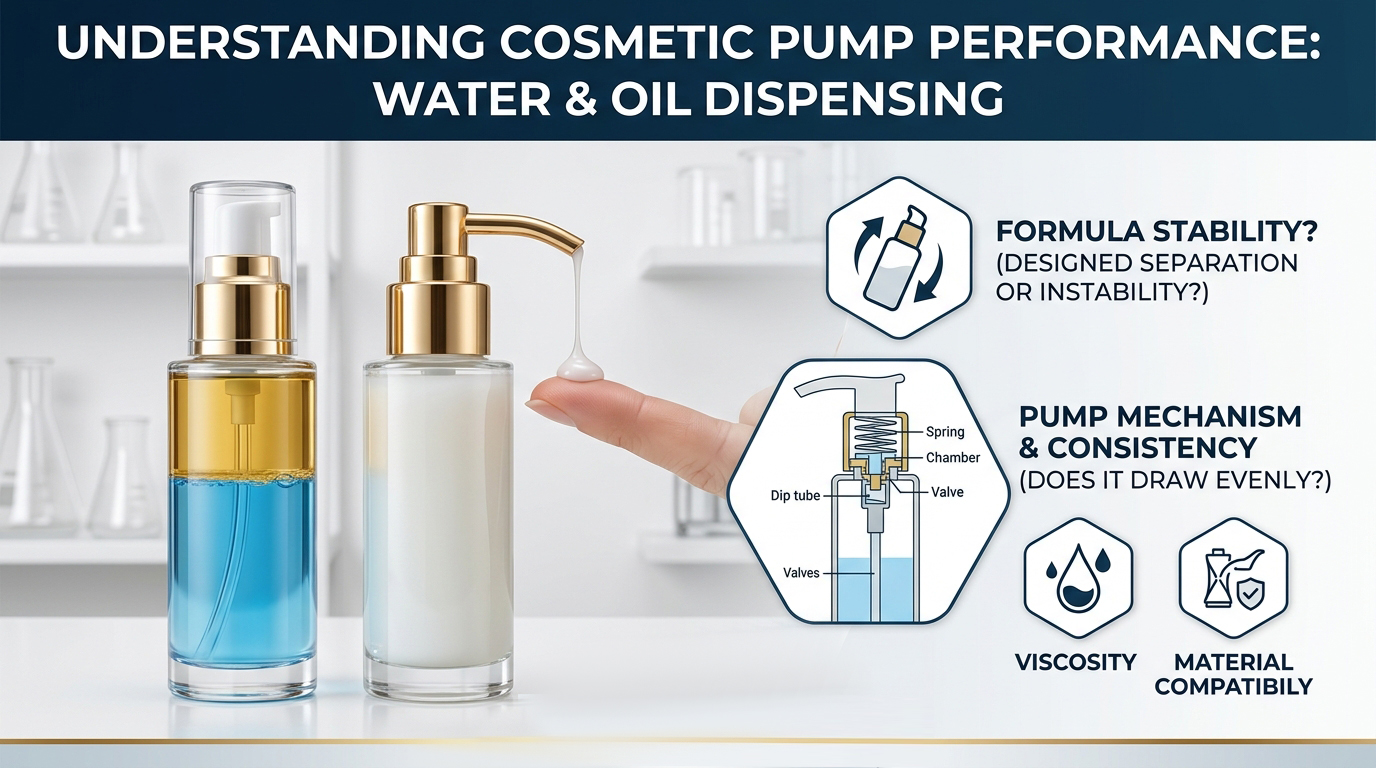
A customer once asked a question that may sound quite technical:
“If a cosmetic formula contains both water and oil, could an inconsistent water-oil ratio during dispensing mean that the pump is defective?”
The answer is not simply yes or no.
A pump dispenser does not normally cause a properly formulated product to separate into water and oil. However, the pump structure and dispensing conditions can affect the composition of each dose when the formula is already separated or does not remain uniform.
To understand why, we need to look at the formula, the pump mechanism, and how the two work together.
Read More 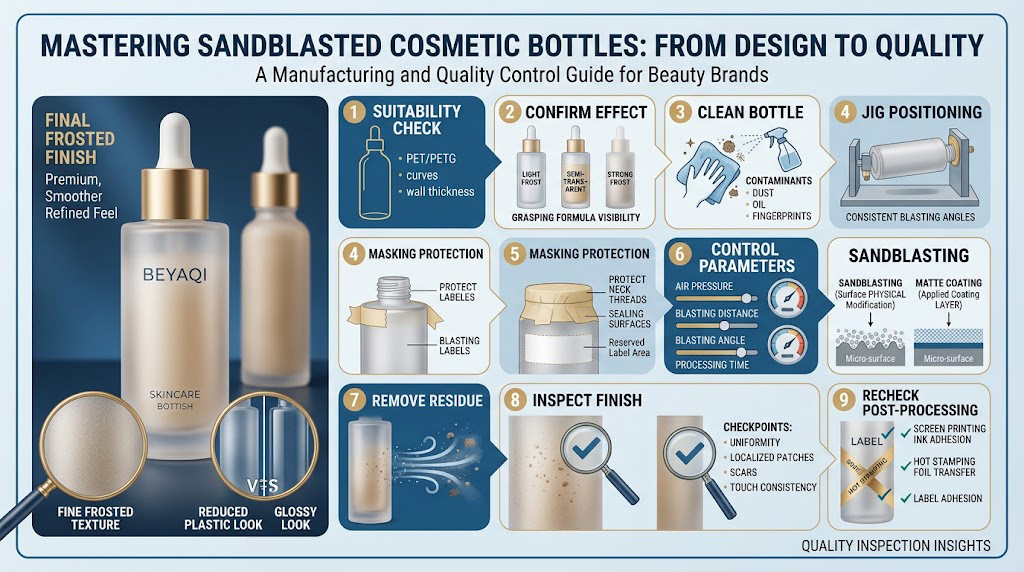
When customers look at a sandblasted cosmetic bottle, they usually notice the final appearance first.
The surface looks frosted.
The texture feels smoother or more refined.
The plastic appearance becomes less prominent.
The overall packaging looks more premium.
But in manufacturing, achieving a consistent sandblasted finish is not as simple as spraying abrasive particles onto a bottle.
The result depends on several factors, including the bottle material, shape, abrasive media, air pressure, spray distance, processing time, surface cleanliness, and quality control.
For beauty brands developing custom cosmetic packaging, understanding these details can help ensure that the final finish meets both visual and functional requirements.
Read More 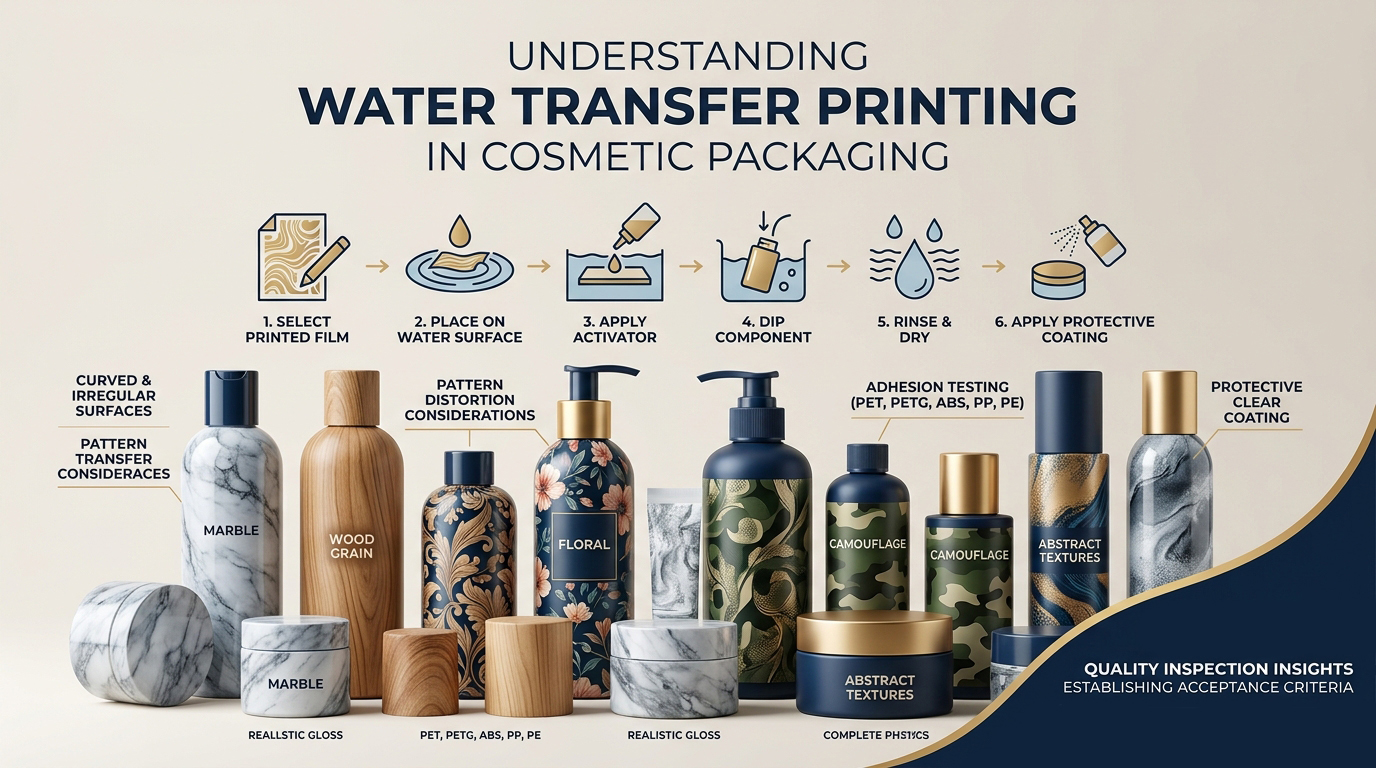
When developing custom cosmetic packaging, brands often have questions like:
“Can this pattern be printed directly onto the bottle?”
“How can we create a marble effect, wood grain, or an all-over decorative pattern?”
“Can the design wrap around a curved or irregular surface?”
Read More 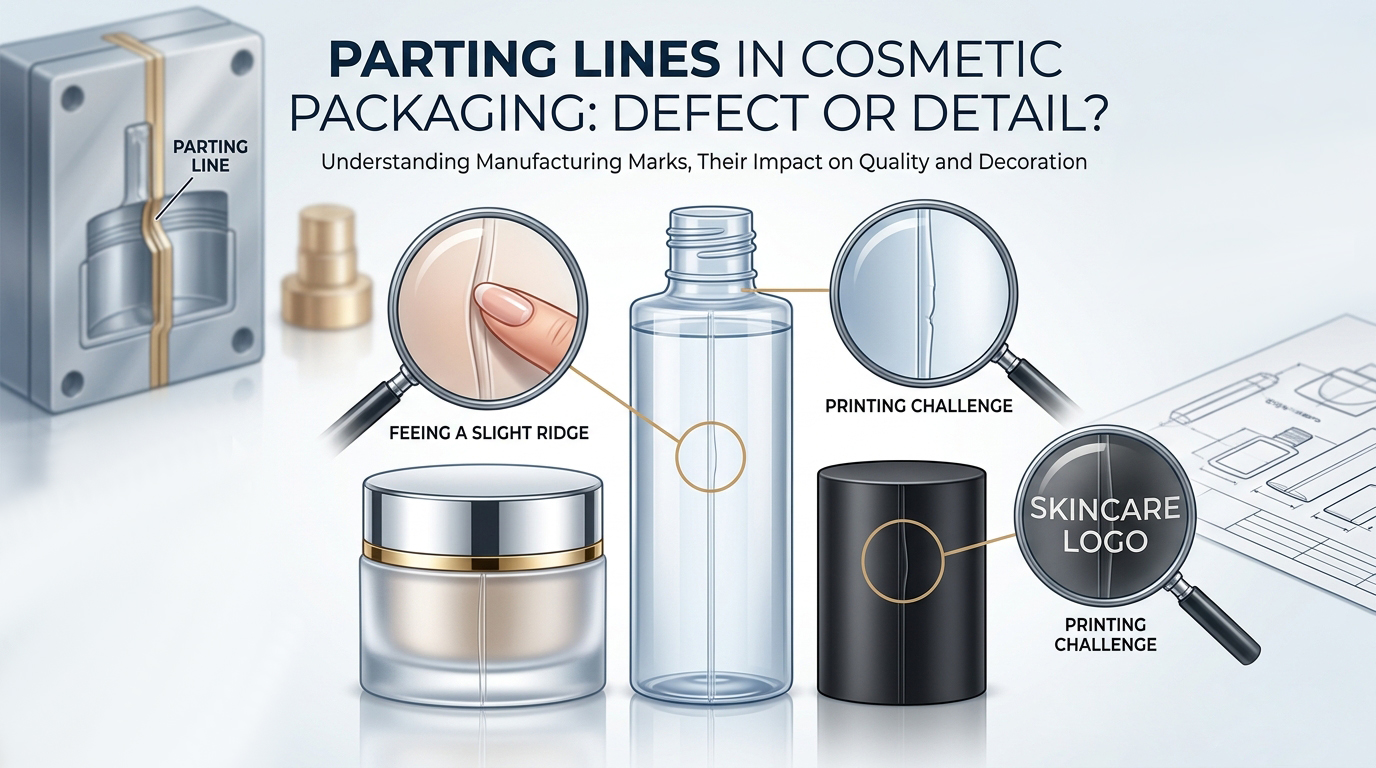
Have you ever noticed a thin line on a skincare bottle, cream jar, or cosmetic cap?
It may become more visible under certain lighting, and sometimes you can even feel a slight ridge when running your finger across the surface.
Is it a manufacturing defect? Not necessarily.
This line is commonly known as a parting line. It is a feature that may appear on molded packaging, depending on the mold design, manufacturing process, and product structure.
Understanding parting lines can help beauty brands evaluate packaging samples more accurately and make better decisions about product design and decoration.
Read More 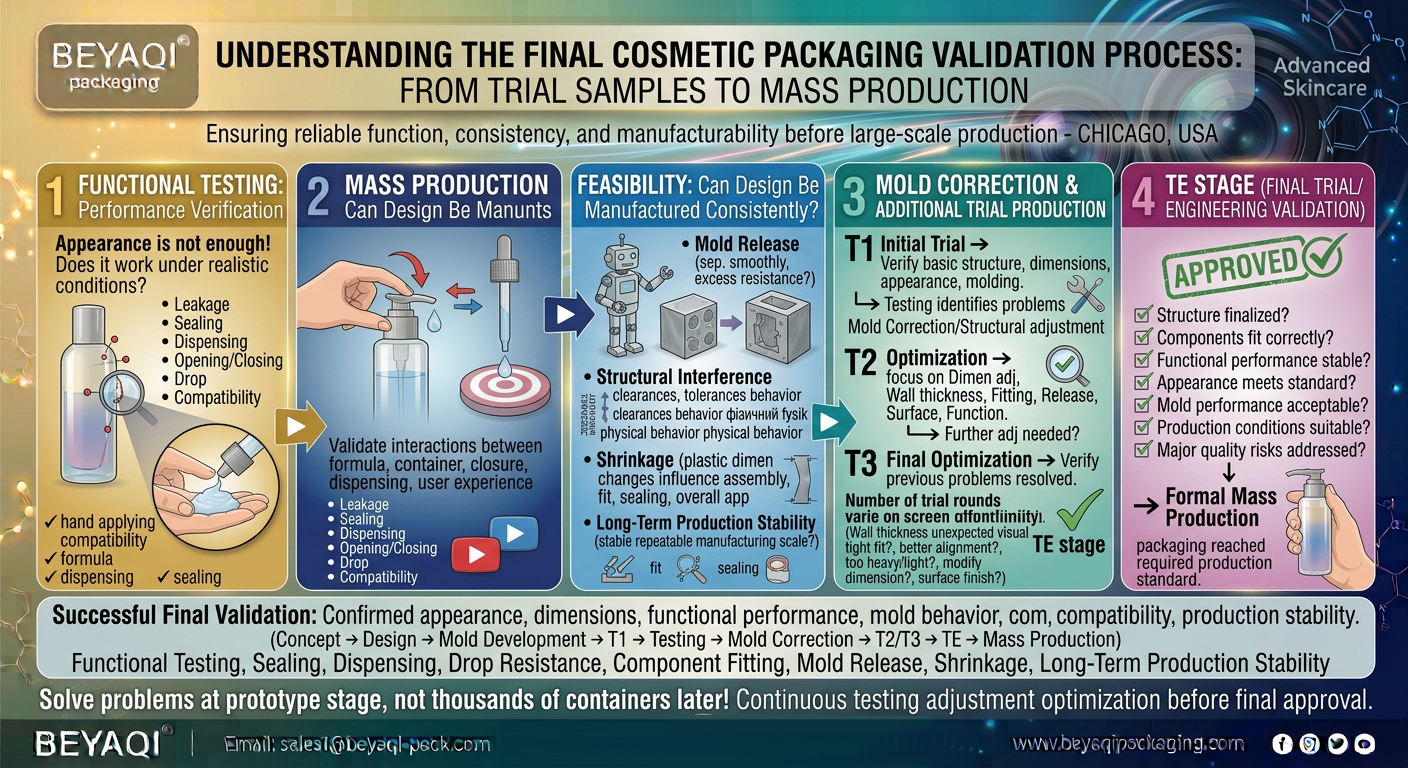
Learn what happens after a cosmetic packaging prototype is approved, including functional testing, mold correction, T1/T2/T3 trials, TE validation, and mass production preparation.
Read More 


 English
